
Operating experience
Building a trusted European route to market for a Taipei-based manufacturer
Using local presence, a wedge product and niche market focus to turn an Asian supplier into a credible international manufacturing partner.
- Company
- Taipei-based contract manufacturer
- Expansion challenge
- Western customers were reluctant to buy directly from a distant supplier and had little interest in sourcing isolated components on their own.
- Commercial unlock
- Create a local European commercial platform, use PCBs as the entry product, broaden into one-stop electromechanical sourcing, and focus on a niche where reference effects travelled globally.
The expansion challenge
TMP entered international markets with a structural disadvantage.
The company had competitive manufacturing capabilities in Taiwan, but that alone was not enough to win international business. Many Western customers did not want to contract directly with an unfamiliar Taiwan-based supplier. They wanted local commercial accountability, rapid communication and a supplier capable of taking responsibility for more of the product rather than shipping one isolated component.
At the same time, competing broadly across sectors such as automotive or industrial machinery would have meant going head-to-head with much larger Asian suppliers and with international customers that already maintained sourcing organisations in China.
The commercial question was therefore not simply how to sell more overseas.
It was how to remove the friction of sourcing from Asia and create a proposition that was materially easier for an international customer to adopt.
The commercial unlock
The expansion model was built around three linked ideas.
First, create local trust.
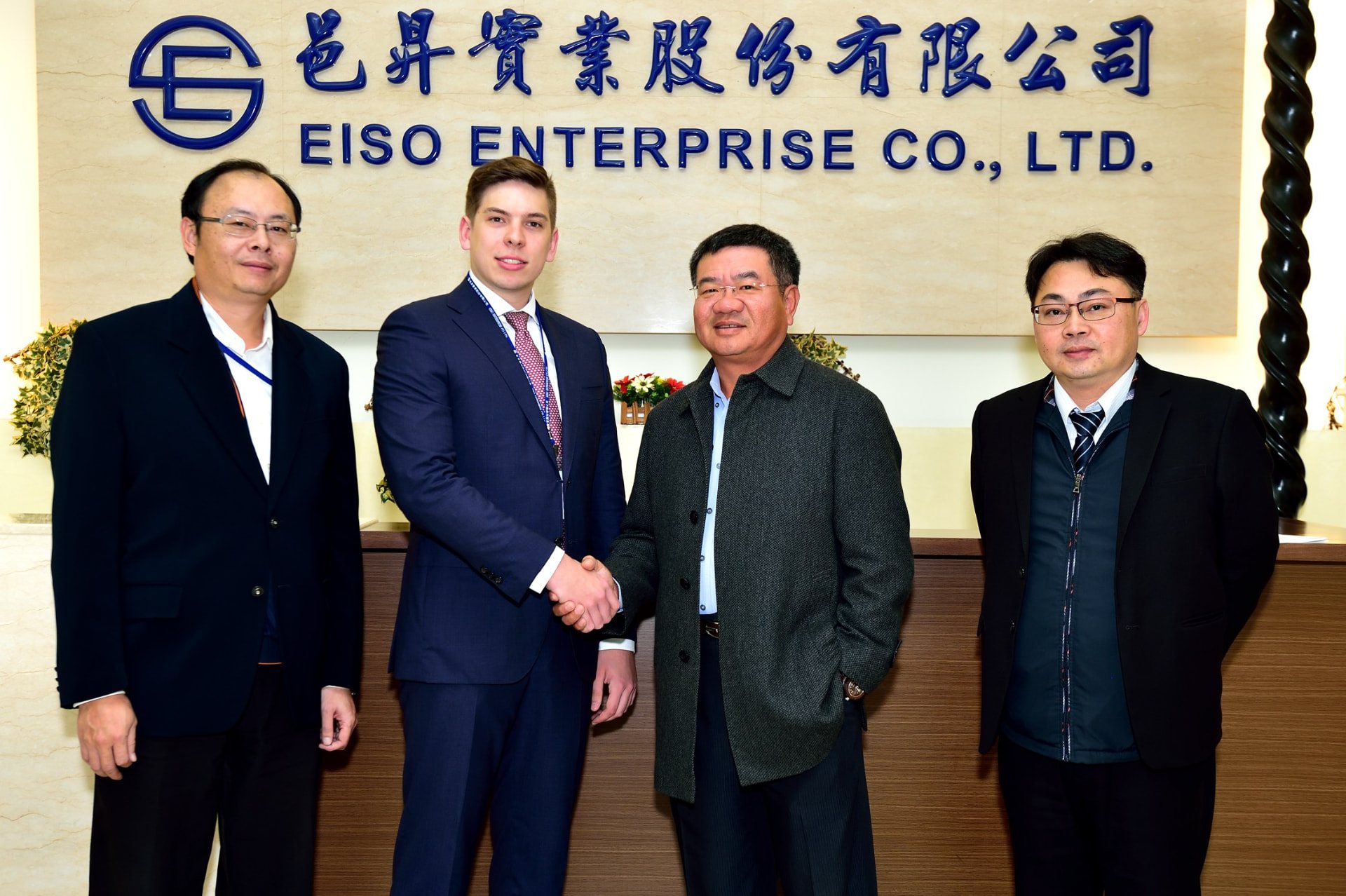
Together with EISO Enterprise Co., Ltd., a publicly listed Taiwan-based PCB manufacturer, we established EISO Europe GmbH as a local commercial platform in Germany.
European customers could work through a locally accountable company while accessing manufacturing capability in Taiwan and across the wider Asian supply base.
The objective was not to obscure where manufacturing took place. It was to remove the commercial friction of buying from distant manufacturers and provide one trusted local interface into the supply network.
Second, stop positioning the business as a narrow component supplier.
PCBs became the wedge into the customer account. Once the supplier had been qualified for a PCB, there was a natural opportunity to expand the relationship into PCB assemblies, cable assemblies and more complex electromechanical sub-components.
Customers did not care whether every component was manufactured inside the same legal entity.
They cared that one accountable supplier could provide a broader solution with high delivery reliability.
Third, deliberately focus on a niche others overlooked.
The gaming-machine industry offered a relatively small and highly connected international customer base, complex electromechanical products, substantial component diversity and high-mix / lower-volume requirements.
Many customers also had limited willingness or ability to manage component sourcing directly in China.
That made the sector particularly well suited to the model.
Once credibility was established with one major gaming company, references carried considerable weight with others across geographies.
How we operationalised it
The commercial proposition had to be reflected in the organisation.
A consortium of manufacturing capabilities was built around the core PCB relationship so international customers could access a broader one-stop solution without having to assemble the supplier network themselves.
The international commercial organisation was intentionally kept small and focused on a limited number of strategic accounts rather than maximising lead volume.
Production capacity was reserved for international customers so engineering requests, samples, design changes and production ramp-ups could be accommodated quickly.
Initially, the bridge between international customers and Taiwan-based production was managed directly by the leadership team.
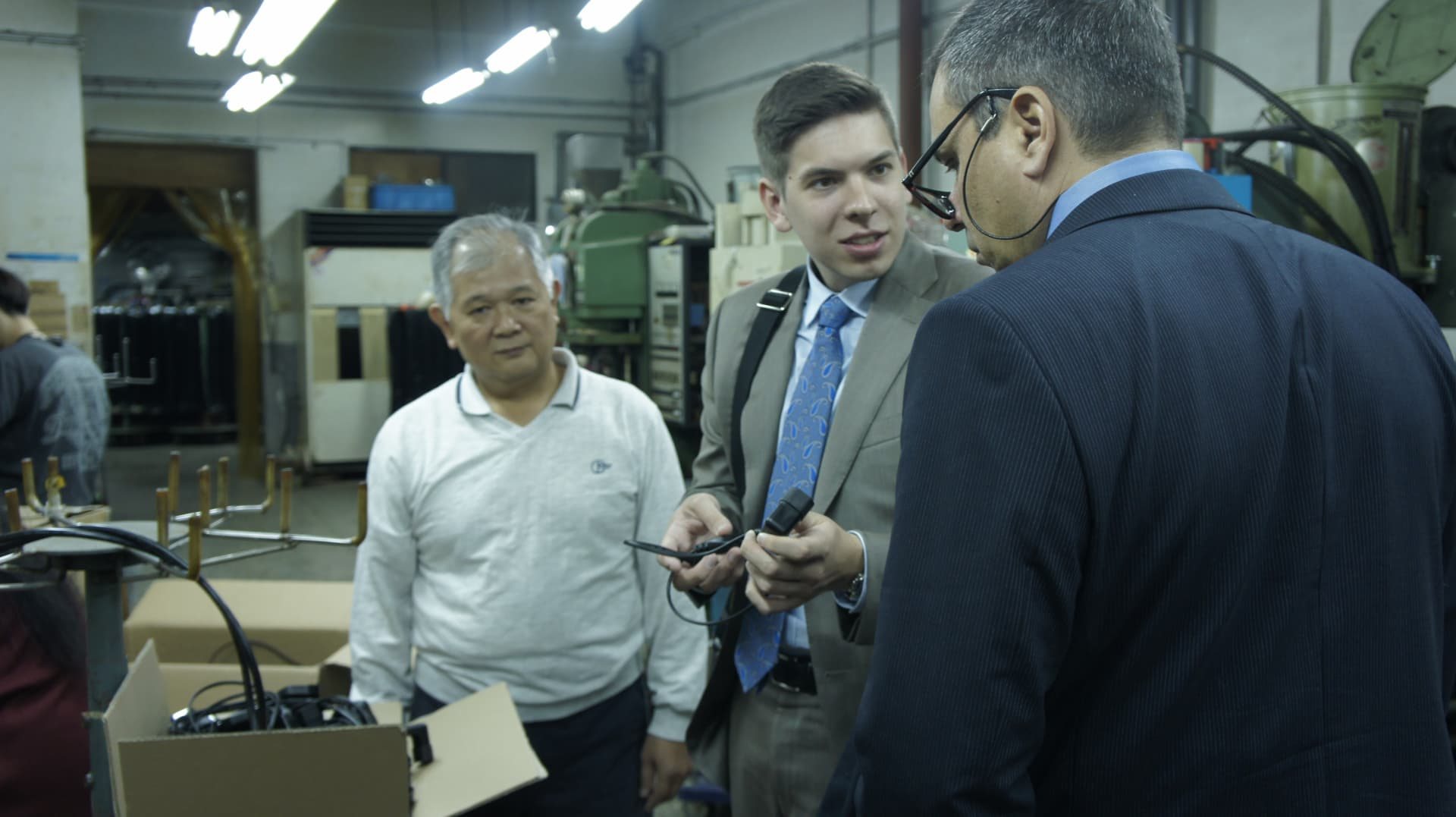
Once the model had proved itself, we hired locally and created a role that went beyond conventional sales: a Sales Execution Engineer.
The role combined customer ownership with execution responsibility across qualification, pricing, technical requirements, sourcing, quality and production ramp-up.
Customers were therefore not handed from a salesperson to an unfamiliar overseas factory after the contract was signed. They retained a local point of accountability through the commercial and execution process.
The outcome
The model created major direct customer relationships across Europe, Australia and the United States, including Gauselmann / Merkur Group, KBL, Ainsworth and IGT.
Overseas annual revenue grew 3.2x, from approximately $250k to $800k.
More importantly, international growth became repeatable because the company had built a deliberate commercial system:
local trust → wedge product → broader solution offering → niche specialisation → operational responsiveness
What this demonstrates
International expansion often fails when companies assume their existing product and sales model can simply be exported unchanged.
The more important questions are:
- What friction prevents the customer from buying today?
- What product gets us through the door?
- What broader capabilities become valuable once trust is established?
- Which niche gives references disproportionate commercial value?
The TMP experience demonstrated that international growth could be unlocked by changing not only where the company sold, but how customers accessed the company, what they could buy from it, and how commercial commitments were supported operationally.
That logic continues to shape how PHOIA approaches international expansion today.
This case reflects operating experience prior to PHOIA and forms part of the track record behind the firm.